Hello everyone!
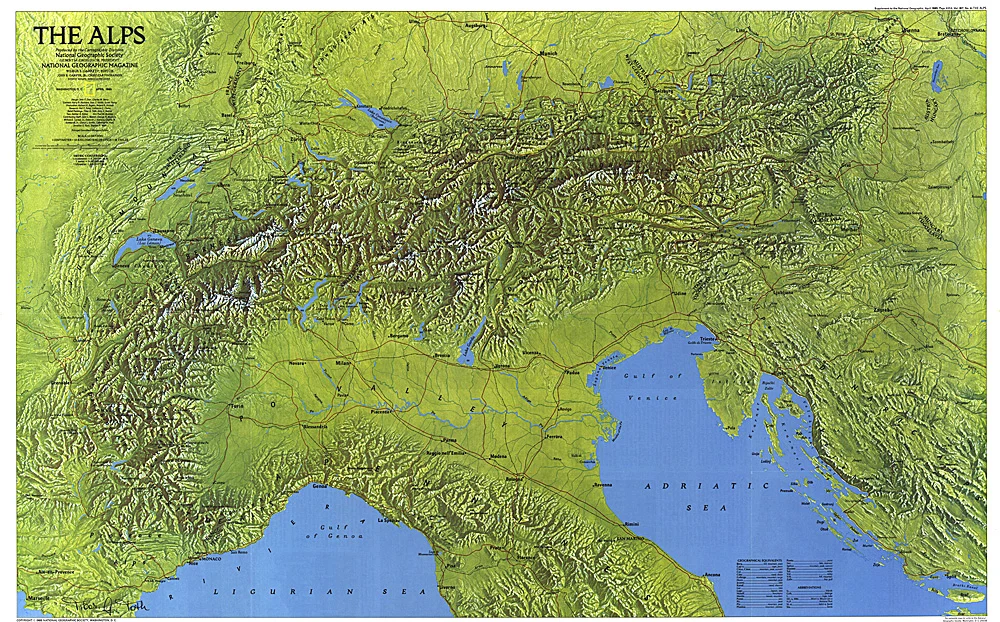
I hope you all have kept up with the Winter Olympics — Congrats to Norway for dominating, especially to Johannes Høsflot Klæbo, the 2nd most-decorated gold medalist of all time, after Michael Phelps. Make sure to tune in to the Paralympics Winter Games, beginning next Friday, March 6!! So of course, I had to feature a 1985 National Geographic Society map of The Alps.
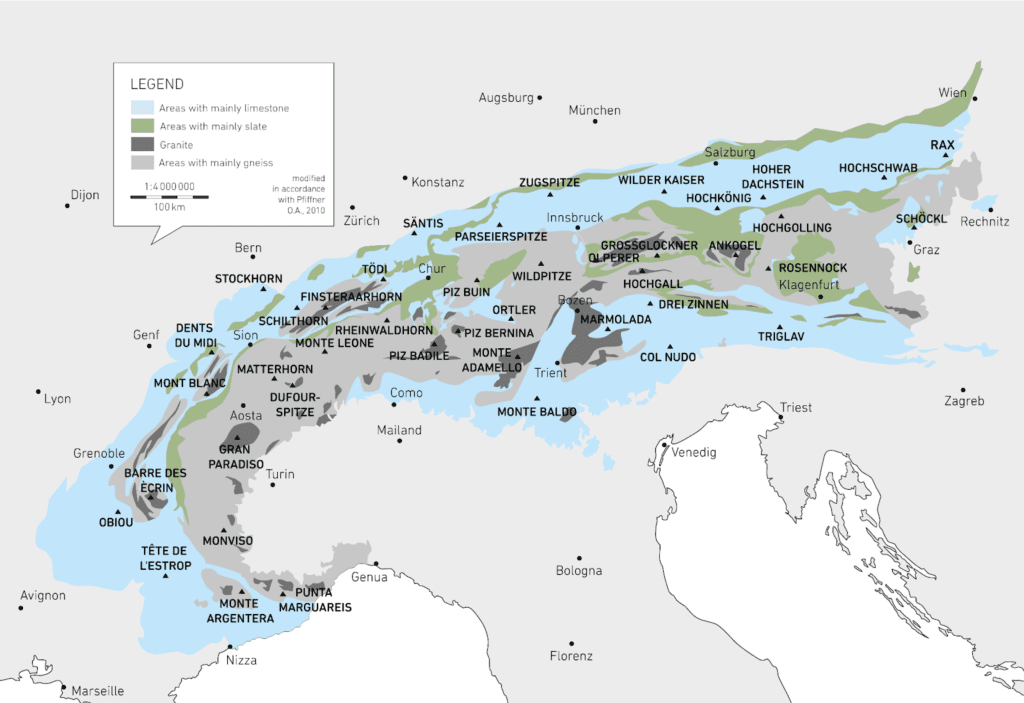
Geologically, the Alps primarily formed during the Alpine Orogeny, a mountain-building event that began about 65 million years ago (mya). However, the actual uplift of these peaks occurred in 35-20 mya from the collision of the African and Eurasian plates. Since then, it has been transformed from glacial activity and erosion to produce such an iconic landscape. When plates collide to form mountains, lots of meshing is occurring between the rocks as it is subjected to high temperatures and pressure conditions. I’ve attached a climbing guide for the Alps below, which very generally outlines what type of rock is occurring. Limestone, a sedimentary rock, is seen as the outer ring of the Alps, and the mixing for the rest is composed of metamorphic rocks. You’re probably asking, “How was limestone deposited in these specific locations?” Well, the answer is written back in history. Long before the collision of the two plates, there was an ocean called the Tethys Sea about 220 mya, formed from the rift of Pangaea into Gondwana and Laurasia, and calcium carbonate floated down to the bottom of the sea to form limestone. Then, with the Alpine orogeny and collision event, the layers were thrusted upward.
Geographically, the Alps are split across eight countries: Austria, France, Germany, Italy, Liechtenstein, Monaco, Slovenia, and Switzerland. The geopolitical issues today regarding the Alps are heavily influenced by climate change and glacier melting, as that has driven border shifts. This has led to socioeconomic decline in certain regions like parts of Austria (predominantly an Alpine country) and there’s increased pressure on resource management. There is still lots of tourism here, though they’ve had to adjust to global warming, and it is an absolutely stunning place.
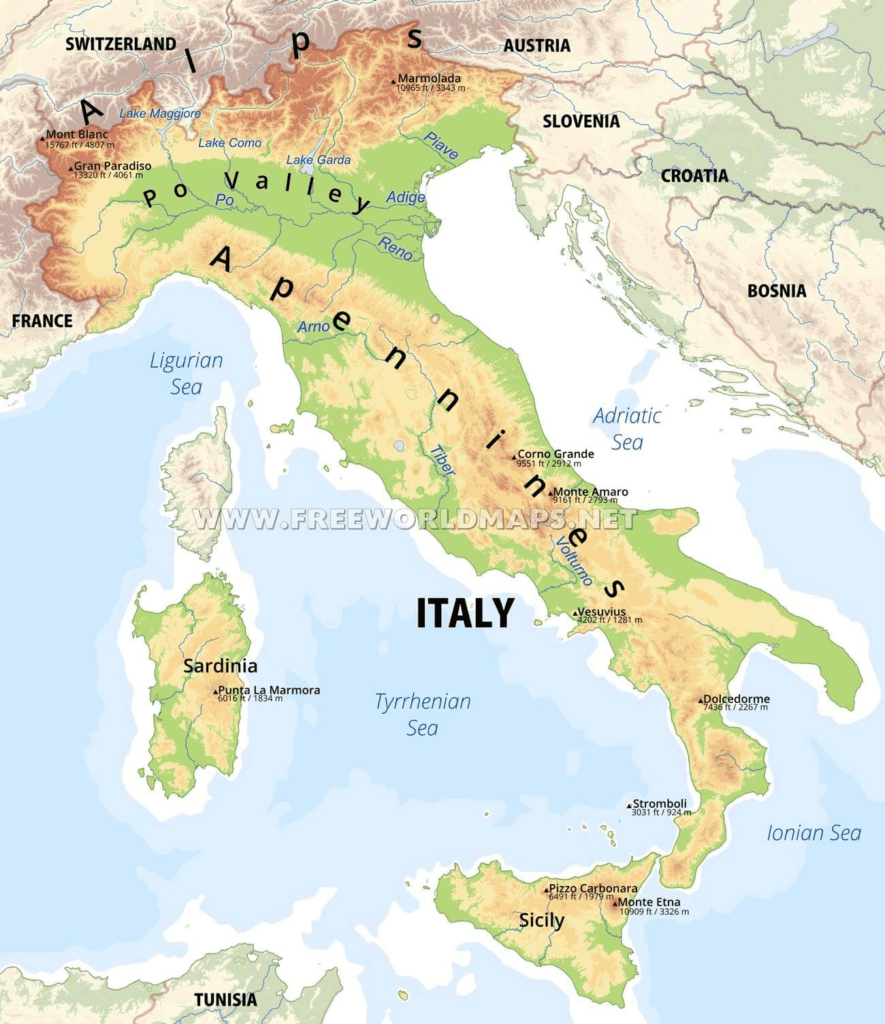
Also, the mountain range that is south of the Alps is actually the Apennine Mountains, which stretches across the entire length of Italy (attached picture below). They are related to the Alpine orogeny but were thrusted upward as a separate event than the Alps.
See ya next week!
Iris Li ‘26
Additional maps below:
Sources:
Geologic history:
Rock type – climbing guide:
https://www.ortovox.com/uk/safety-academy-lab-rock/chapter-1-alpine-climbing-basics/types-of-rock
Apennine range:
